Structural bed bug eradication requires precise environmental controls rather than superficial surface applications. HighlandVero Pest Control deploys forced-air convection heaters paired with targeted EPA-registered…
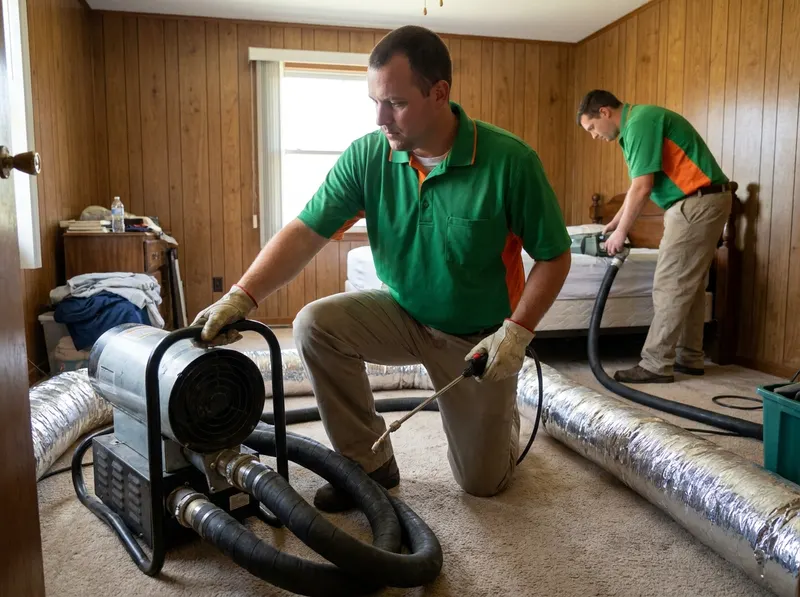
Structural bed bug eradication requires precise environmental controls rather than superficial surface applications. HighlandVero Pest Control deploys forced-air convection heaters paired with targeted EPA-registered formulations to neutralize infestations inside multi-story Craftsman homes in Fourth and Gill, post-war ranches in West Hills, and modern apartments near Bearden. According to the U.S. Environmental Protection Agency, effective pest control requires integrating non-chemical thermal methods with directed chemical applications to overcome pesticide resistance. Raising ambient room temperatures to between 120°F and 135°F disrupts bed bug cellular structures within minutes. This heat penetrates deep into mattress seams, hardwood flooring joints, baseboard gaps, and behind electrical faceplates where topical sprays cannot reach.
While thermal energy achieves a complete initial knockdown across all life cycles, thermal remediation alone leaves no protective barrier once the structure cools. Pairing heat with non-repellent liquid applications and desiccant dusts, such as those cataloged by the Pest Control Technology Association, secures long-term defense. Research documented by the Journal of Medical Entomology indicates that modern strains of bed bugs frequently show physiological resistance to standard pyrethroid insecticides. To counteract this tolerance, HighlandVero Pest Control utilizes advanced multi-chemistry formulations that combine neonicotinoids with insect growth regulators evaluated by the Pest Management Science standards. This combination halts nymph development and neutralizes any secondary perimeter harborages outside the heated zones.
Knox County's climate dynamics directly influence bed bug reproduction and harborages. High summer humidity across the Tennessee River valley encourages rapid metabolic rates in insects, accelerating nymph-to-adult transitions. In older timber structures located throughout Old North Knoxville and Fountain City, wall voids and settling subfloors create complex micro-voids. Technicians calibrate heating cycles using digital probe sensors compliant with standards from the National Institute of Standards and Technology to guarantee that interior wall cores reach lethal thresholds without causing structural warping or electronics damage. Guidance published by the Centers for Disease Control and Prevention underscores that comprehensive remediation avoids the health-related stress and secondary skin infections caused by unresolved bites.
Preparation and safety protocols are strictly regimented before heating begins. Occupants follow an exhaustive prep protocol adhering to safety principles outlined by the Occupational Safety and Health Administration: removing heat-sensitive items including aerosol cans, candle waxes, vinyl window blinds, oil paintings, and prescription medications. Specialized industrial fans distribute hot air uniformly to eliminate cold pockets along exterior foundations and crawl space interfaces. Chemical barriers are then laid along carpet tack strips and interior wall framing following guidelines supported by the University of Kentucky Department of Entomology. For localized or light activity, standalone targeted chemical regimens provide a lower-cost option, but whole-structure combined thermal treatments remain the single-day benchmark for heavy multi-room infestations.
Every job gets a firm, written price after a free on-site visit.
Tell us about your bed bug thermal and chemical elimination job in Knoxville and we'll send a clear, written quote, usually the same day.
 HighlandVero Pest Control