Knoxville's humid subtropical climate and dense ridge-and-valley woodlands create prime breeding conditions for vector pests from late March through October. Properties located near water corridors such as the…
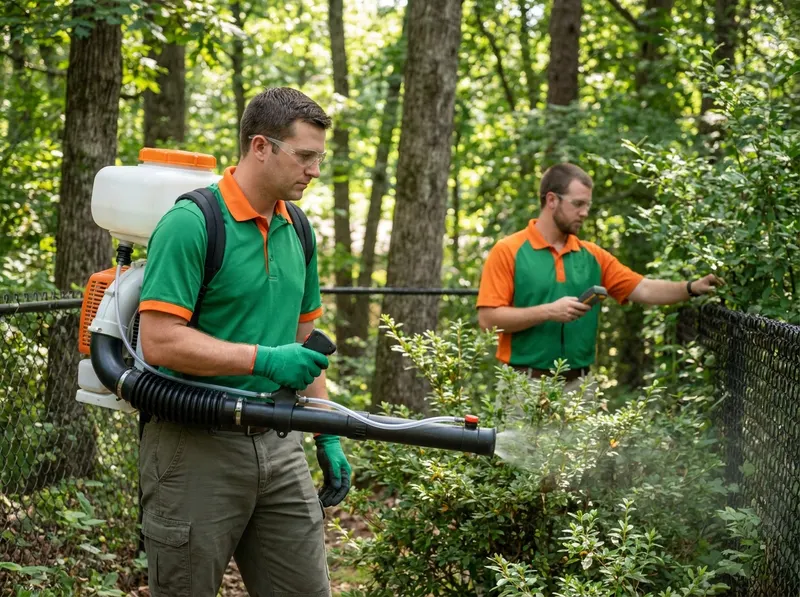
Knoxville's humid subtropical climate and dense ridge-and-valley woodlands create prime breeding conditions for vector pests from late March through October. Properties located near water corridors such as the Tennessee River in Sequoyah Hills and Island Home Park, as well as heavily shaded lots in Fountain City and Fourth and Gill, experience heavy concentrations of the invasive Asian tiger mosquito. Concurrently, the brushy perimeters common across Rocky Hill, Bearden, and West Hills harbor high populations of lone star and blacklegged ticks. HighlandVero Pest Control deploys targeted suppression protocols to arrest these populations at their biological source rather than relying on indiscriminate broad-spectrum misting.
Technicians conduct an initial survey to catalog harborage zones, measuring resting areas under broadleaf canopies, deck undercrofts, and ground ivy. Treatments utilize microencapsulated formulations adhering to the underside of leaves where adult mosquitoes shelter during daylight heat. For aquatic breeding sites that cannot be graded or drained, such as retention swales, birdbaths, and ornamental ponds, technicians apply target-specific Bacillus thuringiensis israelensis to neutralize mosquito larvae without impacting local aquatic life or beneficial pollinators. This targeted approach adheres to Integrated Mosquito Management guidelines established by national health authorities.
Tick control demands a distinct micro-habitat focus centered on ground moisture. Biting ticks migrate via small mammals across unmanaged woodlines and dense leaf litter common in neighborhoods like Old North Knoxville, South Knoxville, and Inskip. HighlandVero Pest Control establishes a granular or liquid acaricide boundary along property perimeters, following research-backed suppression strategies outlined by the University of Rhode Island TickEncounter Resource Center. This physical barrier arrests questing ticks before they move onto manicured lawns, patio surfaces, or pet runs. The treatment specifically targets vectors of Lyme disease, Rocky Mountain spotted fever, and ehrlichiosis, conforming to data maintained by the Tennessee Department of Health Vector-Borne Diseases section.
Selecting professional mosquito and biting tick suppression requires evaluating property usage against treatment longevity. While single-event misting suits gatherings, persistent suppression requires scheduled reapplications every 21 to 30 days due to summer rainfall breaking down outdoor barrier residues. Technicians calibrate mist blowers according to Purdue University Extension vector guidelines and check nozzle pressures against specifications from the EPA Office of Pesticide Programs. All products are verified non-damaging to turf and ornamental shrubs when cured. Families and pets can safely re-enter treated outdoor zones as soon as liquid applications have completely dried, which typically takes between 45 and 60 minutes depending on local humidity. Technicians cross-reference regional rainfall patterns through the National Weather Service Morristown Office and consult regional land management updates from the Knox County Health Department and the Tennessee Department of Agriculture Regulatory Services to time barrier barriers for maximum seasonal endurance.
Every job gets a firm, written price after a free on-site visit.
Tell us about your mosquito and biting tick suppression job in Knoxville and we'll send a clear, written quote, usually the same day.
 HighlandVero Pest Control