Subterranean termite extermination addresses the severe structural threats posed by damp East Tennessee river-valley humidity and dense red clay soils. In neighborhoods like Sequoyah Hills and Island Home Park, close…
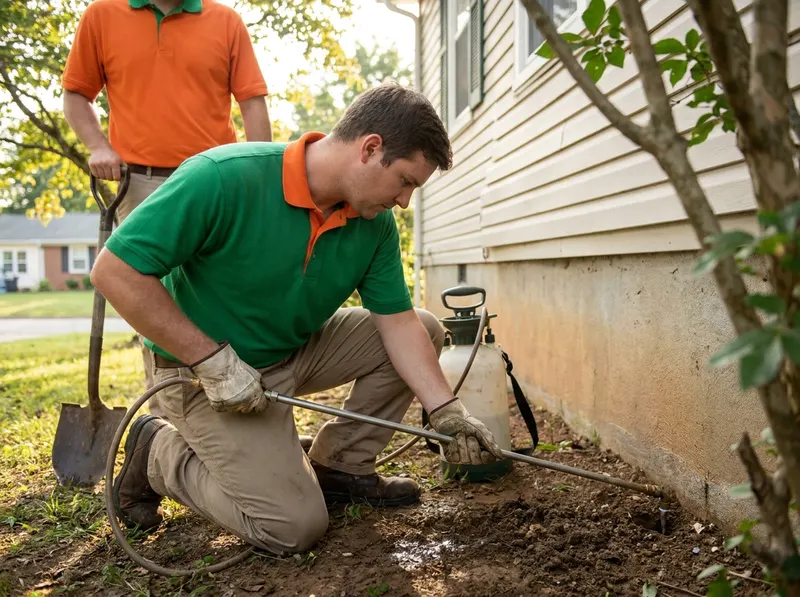
Subterranean termite extermination addresses the severe structural threats posed by damp East Tennessee river-valley humidity and dense red clay soils. In neighborhoods like Sequoyah Hills and Island Home Park, close proximity to the Tennessee River elevates soil moisture tables, driving subterranean termite colonies upward into untreated sill plates and subflooring. The University of Kentucky Entomology Department confirms that subterranean species cause over 80 percent of all structural termite destruction in the regional climate zone. Older crawlspace homes in Fourth and Gill and Old North Knoxville frequently exhibit active shelter tubes climbing interior foundation brickwork, demanding clinical subterranean termite extermination to neutralize hidden colonies before joist deflection occurs.
Effective intervention requires choosing between non-repellent liquid soil barriers and localized slow-acting subterranean bait stations. While baiting monitoring grids deployed through properties in Bearden and West Hills suppress foraging populations over several months according to testing from the USDA Agricultural Research Service, immediate structural infestations require liquid termiticides like non-repellent EPA-registered fipronil. Liquid applications establish continuous chemical zones by rodding directly into dense clay 4 to 6 inches below topsoil along exterior foundation perimeters. Homeowners trade off the non-invasive profile of bait stations against the immediate, localized lethal barrier established through direct soil injection.
Slab-on-grade homes in Rocky Hill and Fountain City face different subterranean entry dynamics than pier-and-beam properties in Inskip. Plumbing penetrations through concrete slabs provide direct, unmonitored soil corridors for foraging workers. Clinical protocols follow guidelines established by the National Pest Management Association and structural guidance from the U.S. Department of Housing and Urban Development, requiring precision horizontal drilling through exterior expansion joints to isolate ground contact points. Environmental protection standards enforced by the Tennessee Department of Agriculture Regulatory Services ensure termiticide placement avoids local groundwater contamination near sensitive karst sinkhole topography.
HighlandVero Pest Control technicians maintain full regulatory compliance under standards from the International Pest Management Standards and structural wood codes overseen by the International Code Council. Every technician deploying subterranean treatments holds state certification matching safety levels governed by the Occupational Safety and Health Administration. To schedule a comprehensive property inspection, call (865) 460-6414 to verify structural safety and eliminate subterranean colonies at the foundation source.
Every job gets a firm, written price after a free on-site visit.
Tell us about your subterranean termite extermination job in Knoxville and we'll send a clear, written quote, usually the same day.
 HighlandVero Pest Control