Spiders in East Tennessee navigate distinct environmental pressures that drive them directly inside residential building envelopes. The native brown recluse ( Loxosceles reclusa ) seeks dry, undisturbed environments…
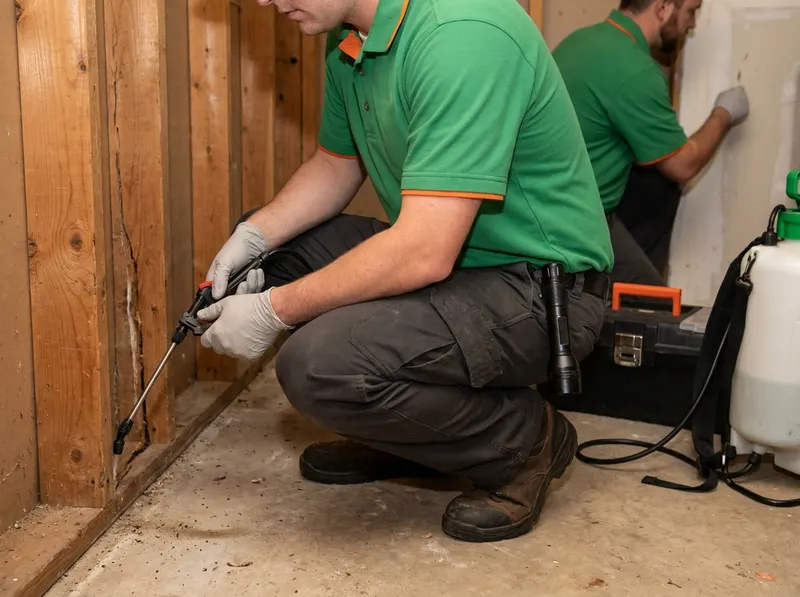
Spiders in East Tennessee navigate distinct environmental pressures that drive them directly inside residential building envelopes. The native brown recluse (Loxosceles reclusa) seeks dry, undisturbed environments such as stacked cardboard storage, cedar shake roof lines, insulated attics, and unfinished subfloors. Conventional baseboard perimeter spraying fails against these pests because brown recluses walk with elevated bodies on long legs, absorbing minimal chemical residual from standard surface coatings. Systematic control requires precise void dusting using desiccants like silica aerogel and synthetic pyrethroids injected directly into electrical outlets, baseboard tracks, plumbing chases, and framing seams governed under guidelines from the EPA Pesticide Program. Home structures in historic neighborhoods like Fourth and Gill, Old North Knoxville, and Island Home Park frequently feature aged fieldstone foundations, tongue-and-groove decking, and open dirt crawl spaces that provide ideal harborage niches during humid summer peaks and autumn temperature drops.
Controlling established arachnid populations demands an aggressive, multi-tiered approach rather than a passive deterrent. According to pest management findings documented by the University of Tennessee Extension, brown recluse populations can establish deep internal nests containing hundreds of individuals within insulation layers without displaying visible signs in primary living rooms. Technicians execute deep-harborage fogging using low-odor micro-emulsions, sweep external eaves to eliminate outdoor web builders near lighting fixtures, and position non-toxic sticky monitors in dark corners to intercept migrating males. Work across mid-century crawl spaces in West Hills and Bearden, or heavily wooded parcels in Sequoyah Hills and Rocky Hill, regularly pairs attic dust dispersal with sub-membrane encapsulations to eliminate the secondary insect populations that serve as their primary food supply. All products align with indoor residential air standards defined by the NIOSH Safety Protocols and the safety mandates overseen by the Tennessee Department of Agriculture.
Selecting a single targeted intervention versus an ongoing seasonal mitigation plan depends on structural age and infestation density. A single-event localized treatment functions effectively for nuisance wolf spiders or yellow sac spiders entering through drafty door sweeps in Inskip or South Knoxville slab homes. Conversely, heavy brown recluse infestations inside multi-story framing require staged follow-ups at 60-day intervals to disrupt egg maturation cycles, adhering to integrated management frameworks from the Department of Entomology and the safety standards of the OSHA Occupational Safety and Health Administration. Exterior structural management incorporates sealing foundation penetrations around utilities using metal mesh tested against structural pest ingress as cataloged by the National Institute of Standards and Technology, reducing perimeter vegetation contact in accordance with fire-safe clearances from the U.S. Fire Administration, and auditing attic ventilation performance aligned with Department of Energy Building Technologies. Structural assessments verify crawl space relative humidity below 55% using meters calibrated to the standards of the ASTM International Standards to discourage moisture-loving prey insects.
Every job gets a firm, written price after a free on-site visit.
Tell us about your brown recluse and spider remediation job in Knoxville and we'll send a clear, written quote, usually the same day.
 HighlandVero Pest Control